
Someone finishes your book. They loved it. So they do what every modern reader does next — they search for you online. And what they discover in those next thirty seconds can either strengthen their connection to your work or quietly end it. A neglected website. An inactive social media page. A generic author bio that says nothing memorable.
That is not an author brand. It is a missed opportunity.
Today, author branding for writers is no longer optional. Readers want more than a good book — they want a meaningful connection with the person behind the story. Whether you are traditionally published or exploring self-publishing services with kingsford Publishing, building a strong author brand helps create trust, visibility, and long-term reader loyalty.

What Is Author Branding for Writers?
Many writers assume branding means logos, colors, or social media aesthetics.
It is much deeper than that.
Your author brand is the emotional and intellectual impression readers associate with your work. It includes:
- Your voice
- Your values
- Your perspective
- Your recurring themes
- The way you engage with readers
A successful author brand creates consistency across your books, website, interviews, newsletters, and online presence.
As publishing expert Jane Friedman explains in her guide to author platforms, readers are more likely to invest in authors they recognize and trust over time.
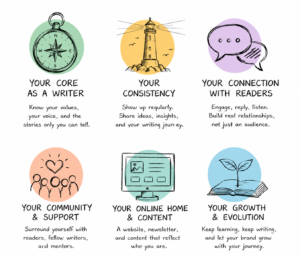
Your Author Brand Is Bigger Than Your Book
One of the biggest mistakes writers make is building their entire identity around a single title.
Books come and go. Your brand remains.
A thriller writer who previously worked in criminal law brings authority and realism. A fantasy author inspired by mythology creates a recognizable imaginative world. A children’s writer who grew up across multiple cultures may naturally write stories centered on belonging and identity.
Those experiences are not side notes. They are part of your brand.
Before building your online presence, ask yourself:
- What ideas am I constantly drawn toward?
- What conversations matter deeply to me?
- Why do I write the stories I write?
- What emotional experience do I want readers to associate with my work?
The answers form the foundation of your brand identity.
Why Readers Care About Authenticity
Readers are not searching for perfection.
They are searching for authenticity.
The authors who create loyal communities are rarely the most polished or famous. They are the writers who feel genuine, relatable, and emotionally honest.
Strong author branding for writers is built through personality and consistency, not performance.
Readers connect with:
- Behind-the-scenes writing struggles
- Honest reflections about creativity
- Personal inspirations
- Writing routines and habits
- Real-life experiences influencing your stories
This kind of openness transforms readers into long-term supporters.
Building an Author Platform Through Consistency
Trust grows through repeated interaction.
Marketing research consistently shows audiences often need multiple encounters with a name before taking action. For authors, that action may be:
- buying a book,
- subscribing to a newsletter,
- following on social media,
- or pre-ordering future releases.
That means your online presence matters before your next launch arrives.
Choose one or two platforms your readers genuinely use and focus your energy there. Share content that naturally reflects your writing life and creative process.
You can also strengthen visibility by learning more about book marketing and publishing strategies that help authors grow sustainable readerships.
For writers building email lists or reader communities, resources like Mailchimp’s email marketing guide can help you understand audience engagement and long-term communication.
Why Long-Term Reader Loyalty Matters
The most valuable readers are not one-time buyers.
They are readers who:
- recommend your books,
- follow your career,
- attend events,
- engage with your content,
- and eagerly wait for your next release.
That level of loyalty cannot be created overnight.
It develops gradually through trust, familiarity, and authentic communication.
A strong author brand helps readers feel emotionally connected to your journey, not just your products.
The Best Author Branding Strategies for Writers
Create a Professional Author Website
Your website acts as your digital home base.
It should include:
- an author bio,
- book information,
- contact details,
- newsletter signup,
- blog or updates,
- and links to social platforms.
A clean, updated website immediately builds credibility.
Share Consistent Content
You do not need to post every day.
You simply need consistency.
Share:
- writing updates,
- book recommendations,
- creative inspirations,
- lessons from your writing process,
- or reflections related to your themes and genre.
Platforms like Reedsy’s publishing blog offer excellent guidance on content marketing and audience building for authors.
Develop a Recognizable Voice
Your voice is one of the most powerful parts of your brand.
Whether you write:
- poetic literary fiction,
- psychological thrillers,
- motivational nonfiction,
- or children’s stories,
your tone and perspective should feel recognizable across platforms.
Readers should immediately sense they are hearing from you.
Common Author Branding Mistakes Writers Should Avoid
Trying to Copy Other Authors
Your brand should reflect your personality, not someone else’s success formula.
Readers recognize imitation quickly.
Focusing Only on Selling
Readers want connection, not constant promotion.
If every post is “buy my book,” people disengage.
Balance promotion with value, insight, and personality.
Ignoring Your Existing Audience
Even a small loyal audience matters.
Responding to comments, emails, and reader messages helps strengthen long-term relationships.
Final Thoughts on Author Branding for Writers
Writing a great book is only part of building a lasting writing career.
Readers remember how you made them feel, what you stood for, and whether they felt connected to the person behind the words.
That is the real power of author branding for writers.
It is not about pretending to be someone else. It is about becoming more visible, more consistent, and more intentional about the identity you already bring to your work.
Because in today’s publishing world, readers are not only buying books.
They are choosing authors to follow for years.